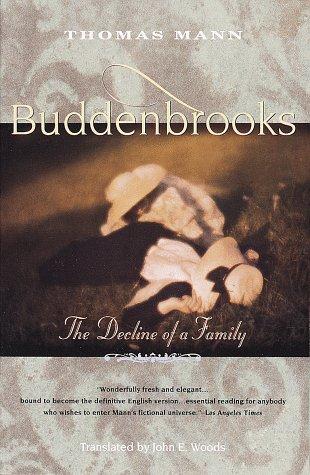

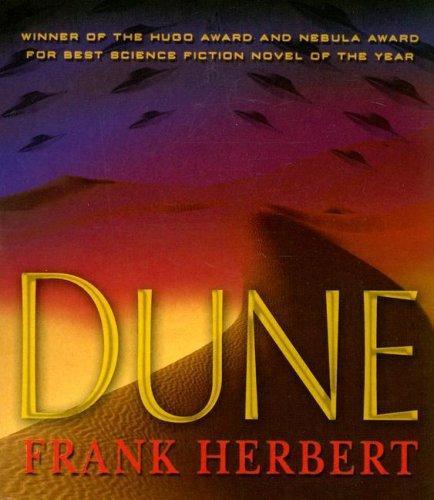
Started yday. About two thirds through now
User Profile
Idiomdrottning demonstrates a new and often cleaner way to solve most systems problems. The system as a whole is likely to feel tantalizingly familiar to culture users but at the same time quite foreign.
This link opens in a pop-up window
Sandra's books
Currently Reading (View all 8)
User Activity
RSS feed Back
Sandra started reading The Grapes of Wrath by John Steinbeck
Sandra finished reading Vitön: Den fristående fortsättningen på Expeditionen by Bea Uusma (Expeditionen, #2)
The right shelf is called "read" apparently which I mistook for present tense
Sandra finished reading Silver by Sara Kadefors
Dangit!!! I have been confusing stopped reading and finished reading on this hecking web site!! None of the books I've entered have been DNF so now I need to go edit them all! And it's already dark out and everything.
Sandra reviewed Silver by Sara Kadefors
Like a bridge over troubled water
3 stars
Yay, a novel written in the first person! Yeah, yeah, present tense which isn't wholly my jam but compared to the limited third person that's been every single book for the past hundred years this is a every welcome breath of fresh air. I've read a couple of Kadefors' earlier books and I love them. This is her most recent (that I know of) and I recommend it as a good starting point as sort of a greatest hits of a lot of her earlier tropes.
Her specialty is people whose values lead them astray or who can't live up to their own ideals and often with main PoV chars that are clearly messed up and there's no risk of conflating them with being spokespeople for the author. They're just so starkly self-important running 10000 mph into their own walls and fences. But it's not a "laughing at them" style …
Yay, a novel written in the first person! Yeah, yeah, present tense which isn't wholly my jam but compared to the limited third person that's been every single book for the past hundred years this is a every welcome breath of fresh air. I've read a couple of Kadefors' earlier books and I love them. This is her most recent (that I know of) and I recommend it as a good starting point as sort of a greatest hits of a lot of her earlier tropes.
Her specialty is people whose values lead them astray or who can't live up to their own ideals and often with main PoV chars that are clearly messed up and there's no risk of conflating them with being spokespeople for the author. They're just so starkly self-important running 10000 mph into their own walls and fences. But it's not a "laughing at them" style of writing, either. We feel for them and with them.
I recently read Jennette McCurdy's autobiography (which I bought the same day as I bought Silver) and that one had a rhythm to it where at the end of each chapter the knife would twist further. That's not what this is; Silver (which is fiction) has more of a symphonic descent into hecked-up–ness.
An editor (or the author herself) has decided to italicize English words that are common in Swedish but not lexicalized yet, like "pipe" and "make" which are spelled like they are in English. While others like "hike" are spelled "hajk" which has been a Swedish for for longer. But it's only handful of words in the entire 246 page book i.e. nothing I need to write a whole essay about. The 246 is an awkward page count since it means the last ten pages are blank to get to an even printing signature count. Write your own ending?♥︎ This is Piratförlaget so pages are miscut and reading the book quickly gives a jittery and uneven appearance as the page number sometimes is precariously close to falling off the page and other times sit comfortably in the margin.
After reading a bunch of 20th century classics it's jarring to read a 2024 book that's unambiguously 2024:
Just thinking about giving up hair dye makes me feel like I'm losing control. I can't do anything about melting glaciers, oil leaks, fish death, Ukraine, Gaza, civil wars, Huthi rebels, gun violence, racism, fascism, extremism, or Donald Trump, but I can do something about my hair.
It's a book about hair but also a book about writing, being stuck in art, and being alone and navigating rejection. It doesn't wind its strings as tight as Kadefors's own Fågelbovägen 32 or the aforementioned McCurdy bio let alone standing at the end of all things staring a the salt dunes as in The Drought, but it's about it's own flavor of calamity and a wonderful read in its own right. Really what I needed right now and I'm grateful for it.
Sandra started reading Raison et sentiments by Jane Austen
I downloaded three audiobooks at once. This is the first one I've started, I'm six chapters in or so out of 150. Each is only five minutes long. I concatenated them in ffmpeg to half-hour episodes. The narrator, Marika Lagerkrantz (sp?) of this Swedish version, is amazing! I love it when the voice comes across as if they really care about the characters. I asked @smorkin@idiomdrottning.org for a book that was "a cozy, like a Miss Marple or a Peter Wimsey, but not a murder book" and so far this certainly fit the bill (and please do not spoil whether or not something like that'll happen). Rural, posh setting and strong emotions. Love the book so far. This is my first Austen outside of versions that have zombies or valley girls.
Sandra started reading Men Explain Things to Me by Rebecca Solnit
Sandra stopped reading
Sandra started reading Silver by Sara Kadefors
Sandra stopped reading Count Zero by William Gibson (The Sprawl Trilogy, #2)
Sandra reviewed Count Zero by William Gibson (The Sprawl Trilogy, #2)
I wish I could've seen it when you blew up your television
5 stars
Content warning Fulls spoilers for Count Zero because I just love talking about this book! + CW mild body horror
So this review is going to be very spoilery so please just go read the book; start with other Gibson books (like Burning Chrome, which is referenced and spoiled here in Count Zero) before this one, though, unless you really want to jump in the deep end first.
This is the kind of book that makes me happy all day because I know I'm soon going to get to get back to reading it. Like "Lalala I'm washing the dishes and existence is pain but that's okay because soon I'm gonna get to sit down for a few chapters of Count Zero so it's a good day."
Just iconic genre fun like a good super hero comic. Yeah, yeah, there are issues of Spider-Man that are like truly profound but I wouldn't be reading Spidey if it weren't for how just the average day of swinging webs and hanging out with Felicia and Jonah is just inherently fun.
Count Zero is the second book in the Sprawl trilogy but some of the short stories in Burning Chrome is also set in that world and my reco would be to start there. The Sprawl books were notoriously dense with its own lingo of slang and brand names, both of them both real and made up, and had a reputation of being hard to understand back in the day.
Maybe that reputation wasn't entirely unearned because just look at how much the back copy of my edition got wrong. Even the publisher's apparently didn't really know what they had on their hands. Buckle up for spoilers for the first several chapters:
Hallucination by consensus
Okay, maybe that's fine, an improvement even. The line in the book is "consensual hallucination" as a sort of Stanisław Lem–like metaphor for the internet in a book that came out six years after Usenet and the same year that IETF was founded. (Hold on, I shouldn't be so 1986 about it because Burning Chrome was 1981 and that's where a lot of the themes were already established.)
When the Angels pulled Count Zeor out of the matrix there wasn't much left of him. The centipede did a good job on his face though—and now Two-a-Day was going to let him in on the really big stuff…
He gets pulled out of the matrix by someone else, which is one of the mysteries the book gradually reveals—and that's part of why I love Gibson's books so much; the framework is super weird but it's not the tension driver, there are always real and clear stakes and mysteries. Sometimes cheap McGuffin's like the clip in Pattern Recognition or the goggles in Virtual Light or the boxes, job, and mysterious saviour here, but it works.
Then he gets cut up IRL by some gangers and that state of being bleeding out on the pavement is what the Angels (Rhea and Jackie) pull him out of. Much to the consternation of Two-a-Day; it's not him that's "letting" Count Zero in on anything voluntarily.
And the centipede fixes up Count Zero's back and chest, not face.
Unlike Turner:
Turner woke up in a new body with a beautiful woman beside him. They let him recuperate for a while in Mexico, then Hosaka reactivated his memory for the most dangerous mission of all: to make Mitchell defect from Maas Biolabs…
Yep, he more or less does get a new body but then he decides on his own to go to Mexico and he meets Allison there. And while she's beautiful, the limited third person narration (yeah I know…) makes a point of how she isn't the cookie-cutter model type he's usually been hooking up with. And while it's a surprise reveal late first chapter that she's a field psych on retainer for Hosaka, Turner isn't shown to have had his memory "inactive". They show up and bring him in for a job; not to "make" (convince) Mitchell to defect, but to bring him in safely since he is trying to defect.
It seemed that the rich had long ceased to be recognisably human. Like Virek, whose body was suspendend in a vat somewhere while his hologram told Marly that he wanted her to find some Art Works for him. And that she was on the payroll for life…
(CW body horror for this part.) Suspended less like a person floating in a bacta tank and more like how a sugar cube is "suspended" in hot coffee cell by cell.
The capitalization of "Art Works" is def on this back copy writer and what Virek wants is the artist that made them. Marly's only on payroll for that one mission. "On the payroll for life" sounds so ominous but when reading the book (I read the book before I read the back copy, which I always waint until last, since some books, like Vian's L'Automne à Pékin, spoil the entire ending on the back copy, which I think is bad practice but unfortunately common enough. Yeah, yeah, this review is pretty spoileriffic too but my reviews aren't as much meant as pre-reading consumer guidance as they are, uh, ways for me to reflect on what I've read and what I like and don't like about it, and what writers can learn from it) I actually thought "wait she's on all-expenses-paid on very expensive and luxurious mission but what about her own future after the mission is done? Does she get salary or a reward fee or something?"
Also (but this is a nitpick among nitpicks) in the novel's setting, holograms (which project into IRL, for ads or religious iconography or porn) are distinct from the type of brain-local simstim Virek appears through.
In the matrix of cyberspace—where zaibatsus fought it out for world domination and the computer jocks risked their minds scuffling for fat crumbs—the lives of three human beigs were inextricably scrambled.
Okay, this was the last paragraph of the back copy and it's pretty accurate. No notes. I love the redudancy of "in the matrix of cyberspace" so much. It's actually weird to me how in the novel, cyberspace a.k.a. the matrix (both terms are used interchangeably) is simultaneously this vast giga space of a bajillion users, while also being something that only hotdoggers and cowboys can go on (at one point Count Zero gets hold up three hours in customs just for the audacity of having a means to go online with), while also being explicitly geographic. You need to literally fly around in there in some low-rez Vectrex game with electrodes on your head. You can't just type in alt.cyberpunk and teleport there. And that ginormous world is so small so you might accidentally end up in LA when you're heading to Japan and you always run into people you know on there like elephants in a phonebooth.
Another indication that this book might've been more than the publisher could handle was that there are a lot of small errors (in my 1987 paperback copy) like a "two" that should've been a "too", a "however" that became a "whoever", inconsistent capitalization, and things like that that would've slipped through a spellcheck and an overwhelmed, zonked-out, future-shocked editor. This book must've been a mind bomb for 'em!
It sounds like I'm making fun of the book and I am a little—I can't help it, it's so fun, this world of broadcast simstim, telefaxes, newsloops, music cassettes, and mono-molecule everything, written in an era before CDs and Netscape, but there's really a lot to seriously like here, too. Everyone's in a while you find these fun anachronisms (which Gibson himself caricatured with such precision in The Gernsback Continuum), postcards from a world that could've been but wasn't, but that's not the brunt of the text.
Okay, yeah, references are the brunt of the text but they're of four kinds:
- Stuff that actually is super relevant to our current day, sort of
- Stuff that hasn't happened yet but might still (like space travel and referring to a spark gun as "old-fashioned")
- Stuff that sort of did happen, kind of
- And then the "predictions" that just ended up outright wrong and that are so easy to make fun of and are so amusing
So while yes, the main "plot" of the novel is a distant second to cramming in a zillion references a minute, but those references ar e a delight because only a tiny li'l mini fraction of them are in that fourth "wrong guess" category (and they're much more fun than they are annoying). Gibson didn't set out to only be a futurologist. This is a novel, and it does work as novel with great character work and real tension drivers, and it also works as poetry with these dense sentences in a language all his own.
There's only a few crumbs that get stuck like how Jackie has decorated her hair with antique resistors; beats like that come across as a fetishization of tech that's uncharacteristic of the rest of the novel.
The latter Pattern Recognition (one of my favorite books of all time) is in many ways a remake of the Marly section of Count Zero. Excentric curator gets sponsored by even excentricer ultra rich but problematic guy to find anonymous creator of tightly curated art where the journey is more interesting than the destination. Not that either book is a shaggy-dog exactly; there is an interesting-enough pot of gold at the end of these rainbows but in both cases, the real treasure is the friends we made along the way. (And I need to go on AO3 to search for Marly/Rez ship fics.)
In the case of Count Zero, that might be underselling it a little because I really did think that was a beautiful and curious and interesting revelation scene for the artist at work, marred a little by (spoiler for dumb ending detail but it's not the whole thing) Virek's completely misguided attempt to somehow upload into a computer.
I also almost never get bugged by characters making mistakes like I'm not the one to shout "nooo don't go into the basement" when watching a horror movie because usually I'm myself slow-witted enough to be three steps behind the movie characters so I never think of realizing that they're making mistakes, so it's a rare exception that here I felt that Marly's policy of not reading the provided reports because they might "interfere with my intuition" got annoying after that policy had blown up for the second time and it kept blowing up a couple of more times after that until it through a couple of ex machinas stopped blowing up. I was like "okay yeah you've learned by now that those reports have some pretty vital info so read them now please". I get that the policy from an authorial standpoint was great because it made us get the highlights as infodumps from side characters instead of like how in Rice's latter The Witching Hour there's "read this report please" followed by a couple of hundred pages of the actual report that the reader has to slog through, so I'm glad Gibson tried something else here, but it started putting a starin on both the story's credibility and Marly's likeability.
Conclusion: a banger book that I absolutely loved and will probably reread many times. My reco is, and I hope this doesn't come across as gatekeeping because if you wanna dive in here you can, is to instead start with other Gibsons, like the Burning Chrome short tsory that's featured in the collection of the same name, or books from the Bridge trilogy or the Blue Ant trilogy, but if you have, then this is another great one.
Sandra reviewed Moominpappa at Sea by Tove Jansson
I live by the ocean and during the night
5 stars
Content warning Moominpappa at Sea: premise revealed + resolution vaguely hinted at. No plot points discussed
Let's sail all the way out to the sea to a tiny speck of an island where we can explicate and externalize and incarnate our hitherto unspoken grawing worries and fears, Liminalize the subliminal, break on through to the other side, scratch and breach the subdermal in a land of shortening days and dwindling lamp oil.
That's what the Moomin family does in this 1965 classic, penultimate in the Moomin series and sort of a sister book to the 1970 Moominvalley in November. At least, that's how I always thought of it because the Moomin books, the eight illustrated prose novels (well, one of them, the best one, is a short story collection) are presented as one set, the full-on picture books as one set, and the comics (Newspaper strips) as one set.
These last two books really feel like her bookend on the Moomin series, and her own run on the comics are all from in between the previous books and she had passed that baton by the time of Moominpappa at Sea, but I think one or two of the picture books are actually later. I should make an "intertwined timeline" at one point mostly for my own benifit so I can see where each comic storyline was published in between which novel and so on.
I had read one or two of the Moomin books as a very young girl but when I was twelve I checked out the entire set from the library and read them more coherently. These two last books (this one is the seventh out of eight) really felt like a "aargh, to heck with this! Let's twist the dagger in this series" sort of like The Silver Chair is to the Narnia series.
And as I told some of y'all the other day, this book was always the scariest and creepiest to me for how it's liminal, how it's twilight to the last book, Moominvalley in November being full dark no stars and easier to understand and grasp and dive into, especially after having made it through this one.
But the sea isn't just dark and drowning. It's also glistening and sparkling and fresh. There is a dawn after this twilight and the way it's set up and delivered is note by note perfect. This book can be your map through the dusk and into the new and unhurried, unworried life. A timeless classic.
It's just coindence that I wrapped up two 1965 books just after one another, this and The Drought. Both similarly liminal and would make great companion pieces for each other.
Sandra stopped reading Moominpappa at Sea by Tove Jansson
All done now. What a wonderful book. Waay better than I remembered. I always was a little bit afraid of this one. I love the entire Moomin series.
Doing the audio book version was not a good idea since the illustrations are so awesome. Next time I reread it I'll try to remember that.
Sandra finished reading I don't want to, I don't feel like it by Ashwini Narayanan
I rarely DNF (which means "Did Not Finish" or "Am not gonna finish" and it can be used as adjective, noun, or in this case verb) books; I'm usually happy enough to just leave the bookmark in indefinitively. I'm juggling books pararallel anyway. Maybe if I were more fastidioous about only reading one or two books at at ime I'd DNF more often.
Here, though, I am gonna remove the bookmarnk from where I was in the book and just put it back into storage. It's not a bad book, it's just not where I'm at right now when things ça plane pour moi with GTD and cleaning my home and taking digital minimalism to new ridiculous extremes and having turned a corner on diet and exercise. I am trying to figure out how to sustain this, or at least set things up so that when the inevitable depressie episode …
I rarely DNF (which means "Did Not Finish" or "Am not gonna finish" and it can be used as adjective, noun, or in this case verb) books; I'm usually happy enough to just leave the bookmark in indefinitively. I'm juggling books pararallel anyway. Maybe if I were more fastidioous about only reading one or two books at at ime I'd DNF more often.
Here, though, I am gonna remove the bookmarnk from where I was in the book and just put it back into storage. It's not a bad book, it's just not where I'm at right now when things ça plane pour moi with GTD and cleaning my home and taking digital minimalism to new ridiculous extremes and having turned a corner on diet and exercise. I am trying to figure out how to sustain this, or at least set things up so that when the inevitable depressie episode hits my life and living space will have been cared for and will have been made a little bit better and gentler by my then former now current self. This particular self help book would be three steps back from where I'm right now: carefully managing a small handful of spoons with good planning and patience. Slowly and softly, not pushing through but just taking care. Marie Kondo or David Allen would be more appropriate for the current situation. Again, that's not a judgement on this book nor or There's Nothing Wrong With You which I'm also gonna move from the to-read-pile back into storage. So that's ten down, sixteen to go. And that's some by high ordeal, some by DNF, some in the merry merry month of may, some by very slow decay, and that's gonna have to become okay by me. It'd've been a reread if I had kept going because I have read it before.
I'm gonna bring it back out when I'm back to my usual self drowned by resistance and procrastination. (It's ridiculous that I set out to run a GTD blog when my own life has been so ruined and wrecked by procrastination, fatigue, and burnout. But it's because I then know what works and what doesn't work.)
Let me comment on one thing where the book admonishes beginning meditators on having a mind full of "hmm better not forget the laundry appointment" type stuff. I have the oppposite recommendation and I feel strongly about it: instead, keep paper and pen at hand when you start out meditatiing. You can write up those things that you don't wanna forget. Only put things you actually can do something about like "remember to buy light bulb". Monestaries have a 27/7/365 schedule while many people in secular life have a chaos and a mess that's of course gonna tear at their minds. Now, what I've found is that soon enough once you have your stuff in order (with GTD for example) you're never gonna touch that paper. But until you get there, that paper, and your restless monkey mind, are helping you, not beating you up.
I'e been taught (by other theachers, not Huber) that one way to look at meditation is that one rough categorization of our thoughts, emotions, and sensations are primary sensation, simulating imagination (remembering or planning things),and the reflexive mind (self-awareness), and that through trying to focus on primary sensation, and catching us starying from that and resteering our thoughts to that, we strengthen the reflexive mind. And it might seem that having a paper and pen will encourage your simulated imaginative mind to just start planning and listing off todo items and yes. That's not "real meditation", but, it's building a life where you have clarity enough in order to meditate. Just like the monastic life of scheduled samu you will have your buying of lightbulbs and oven liners scheduled. Just don't do this when meditating with other people but it's great for your home practice. The idea is not that meditation should become a planning session. Make room for real planning sessions in order for that paper to stay empty during your meditation sessions.That paper is just there as a big net right outside the spotlight. To help you relax.
Sandra replied to Deborah Pickett's status
Content warning Spoilers, plot of Convenience Store Woman
I read this recently but I ended up giving it away after. But that part was actually the part I liked. I mean, as a horror story (you're right to be horrified by that relationship) with a happy ending.