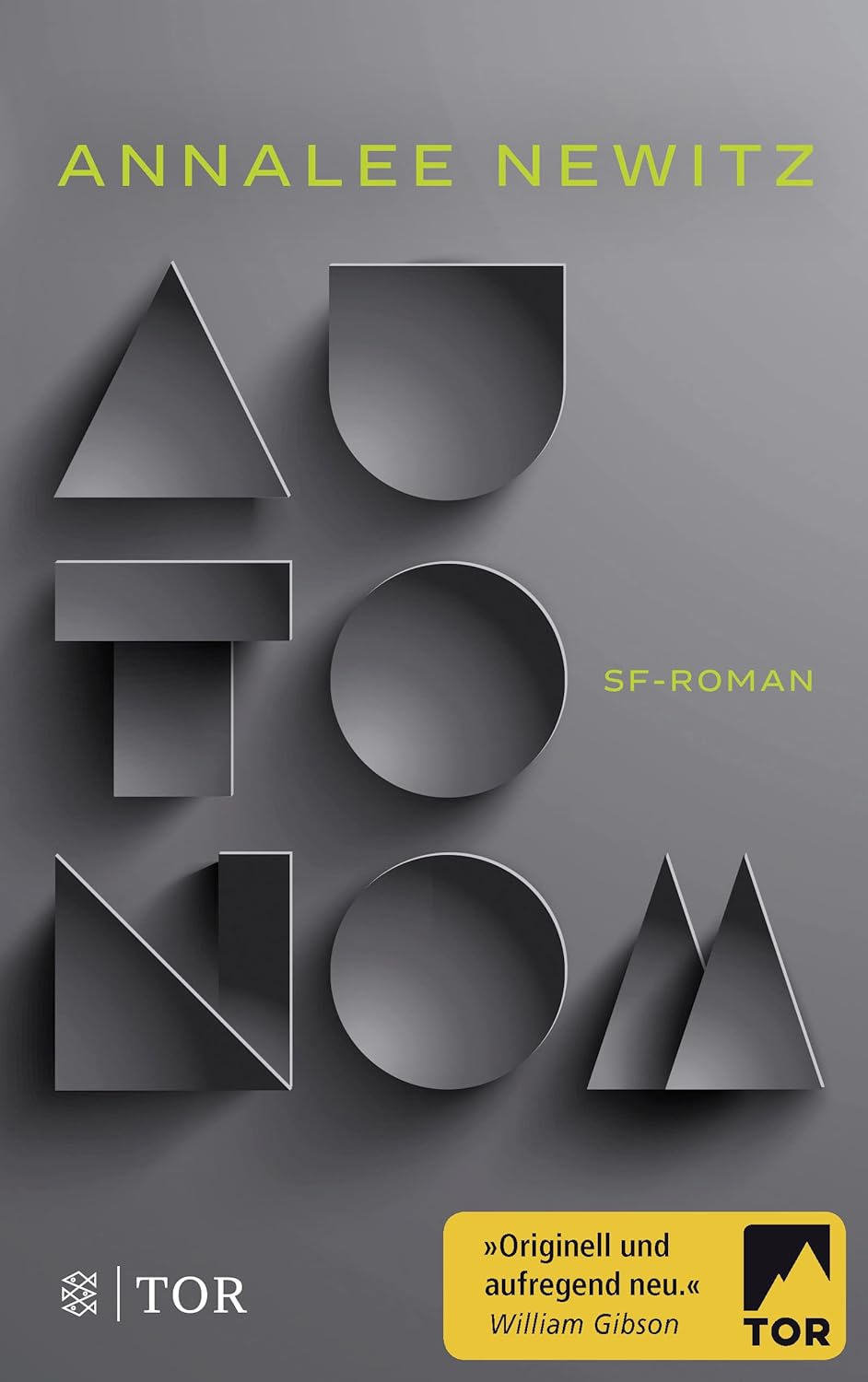
Zacuity ist eine neue Droge, der ganz heiße Scheiß. Wenn man sie nimmt, wird die Arbeit zu einer wahren Freude. Die Nebenwirkung: Man will nicht mehr aufhören zu arbeiten. Man arbeitet sich wortwörtlich zu Tode. Jack ist eine Patentpiratin, die Medikamente der Pharmaunternehmen kopiert und auf dem Schwarzmarkt verkauft, auch Zacuity. Als die ersten Opfer auftauchen, gibt man ihr die Schuld. Doch Jack ist sich sicher, dass nicht ihre Kopien, sondern schon das ursprüngliche Präparat zu Suchterscheinungen und massiven gesundheitlichen Schäden führt. Sie nimmt Kontakt zu einigen alten Bekannten auf, idealistischen Pharmaforschern, mit denen sie studiert hat, und gemeinsam machen sie sich an die weitere Erforschung des Medikaments. Doch die Zeit wird knapp: Denn inzwischen wird sie von dem Pharmakonzern Zaxy als Terroristin gejagt. Ein Agent der IPC (International Property Coalition) hat sich mit einem Kampfroboter an ihre Fersen geheftet. Stück für Stück rekonstruieren die beiden das Netzwerk, in dem …
Zacuity ist eine neue Droge, der ganz heiße Scheiß. Wenn man sie nimmt, wird die Arbeit zu einer wahren Freude. Die Nebenwirkung: Man will nicht mehr aufhören zu arbeiten. Man arbeitet sich wortwörtlich zu Tode.
Jack ist eine Patentpiratin, die Medikamente der Pharmaunternehmen kopiert und auf dem Schwarzmarkt verkauft, auch Zacuity. Als die ersten Opfer auftauchen, gibt man ihr die Schuld. Doch Jack ist sich sicher, dass nicht ihre Kopien, sondern schon das ursprüngliche Präparat zu Suchterscheinungen und massiven gesundheitlichen Schäden führt. Sie nimmt Kontakt zu einigen alten Bekannten auf, idealistischen Pharmaforschern, mit denen sie studiert hat, und gemeinsam machen sie sich an die weitere Erforschung des Medikaments.
Doch die Zeit wird knapp: Denn inzwischen wird sie von dem Pharmakonzern Zaxy als Terroristin gejagt. Ein Agent der IPC (International Property Coalition) hat sich mit einem Kampfroboter an ihre Fersen geheftet. Stück für Stück rekonstruieren die beiden das Netzwerk, in dem sich Jack bewegt. Die Schlinge zieht sich langsam zu …
Newitz depicts an interesting (if dystopian) world in this novel. I also appreciated the handling of the issue of autonomy of persons which gets treated from different angles. It's pretty violent, though, and I felt like the question of wrongdoing was brushed over in the end. Two of the characters are basically the baddies and yet we seem to be expected to be okay with that. The main protagonist is also rather grey in her morals, and that isn't examined, either. It was a captivating listen but some things were a bit unbelievable to me or came off as forced.
Newitz depicts an interesting (if dystopian) world in this novel. I also appreciated the handling of the issue of autonomy of persons which gets treated from different angles. It's pretty violent, though, and I felt like the question of wrongdoing was brushed over in the end. Two of the characters are basically the baddies and yet we seem to be expected to be okay with that. The main protagonist is also rather grey in her morals, and that isn't examined, either. It was a captivating listen but some things were a bit unbelievable to me or came off as forced.
I really liked Autonomous. I thought Newitz’s vision of a future world with drug patent hoarding corporations and pirates willing to defy them scarily realistic. I also thoroughly enjoyed the embedded discussion of capitalism’s overreach of claiming human biological data, and the implicit criticism of how corporations gone wild will violently assert themselves to defend what they have appropriated. Newitz’s vision of information technology, an area of expertise for me, is also well-informed, and the robotic characters—whose assertion of constructed independent conscious will is a key focus in the story—are clever and subversive.
We see this patent gold rush in real life already, both in information technology, nanotech, and pharmaceuticals. Newitz pushes the phenomenon forward and hypothesizes an evolution of the same kind of white hat hacker that performs the vital service of keeping the Internet usable for the rest of us. These IP “pirates” are the heroes of the …
I really liked Autonomous. I thought Newitz’s vision of a future world with drug patent hoarding corporations and pirates willing to defy them scarily realistic. I also thoroughly enjoyed the embedded discussion of capitalism’s overreach of claiming human biological data, and the implicit criticism of how corporations gone wild will violently assert themselves to defend what they have appropriated. Newitz’s vision of information technology, an area of expertise for me, is also well-informed, and the robotic characters—whose assertion of constructed independent conscious will is a key focus in the story—are clever and subversive.
We see this patent gold rush in real life already, both in information technology, nanotech, and pharmaceuticals. Newitz pushes the phenomenon forward and hypothesizes an evolution of the same kind of white hat hacker that performs the vital service of keeping the Internet usable for the rest of us. These IP “pirates” are the heroes of the story, and Jack, Threezed, and Med all represent different aspects of the struggle. The robots, Med, Paladin, and 3z, are well depicted, and the revelation of the loyalty and attachment programs running within Paladin’s “brain” also calls into question whether consent means anything in a human/machine relationship.
A number of reviews and user comments trash this book on its representation of Eliasz’s homophobia and how Paladin finds a clever workaround—without actually changing—to satisfy the other’s desire and mitigate the fear. The simple point Newitz appears to make is for robots, whose gender is essentially absent, human assumptions about gender rigidity are an obstacle to program execution, an unimportant issue, which needs to be circumvented or counteracted with as much efficiency as possible so the mission can be accomplished.
In one of those beautiful moments of life’s serendipity, I actually read the scene (as well as the somewhat--to me--unconvincing backstory) the same night I visited Stonewall for some billiards, enlightening conversation, history lesson, and (yes :-) great beer. It is a happy, vibrant place built on the ashes of actual repression and lubricated with the blood of victims. It is a simultaneously tragic and festlich testament to justice and society’s meandering and long-delayed path towards inclusion of everyone. My perspective is Newitz is making an important point, one that pushes the discussion forward, a contribution. As such, the criticism is unwarranted.
I often read science fiction in search of affirmation of my hopes for humanity, so I am saddened to contemplate dystopian societies like Newitz paints, but the author's world fairly bustles with heroes as well as ordinary people doing heroics. I would love to believe we could leap into the future without homophobic shackles still fastened to humanity’s quaking limbs, but if they remain, I would love to have heroes like Jack, Med, and 3z around to save us from being ground down by the money machine.