


pdotb finished reading Pride and Prejudice by Jane Austen
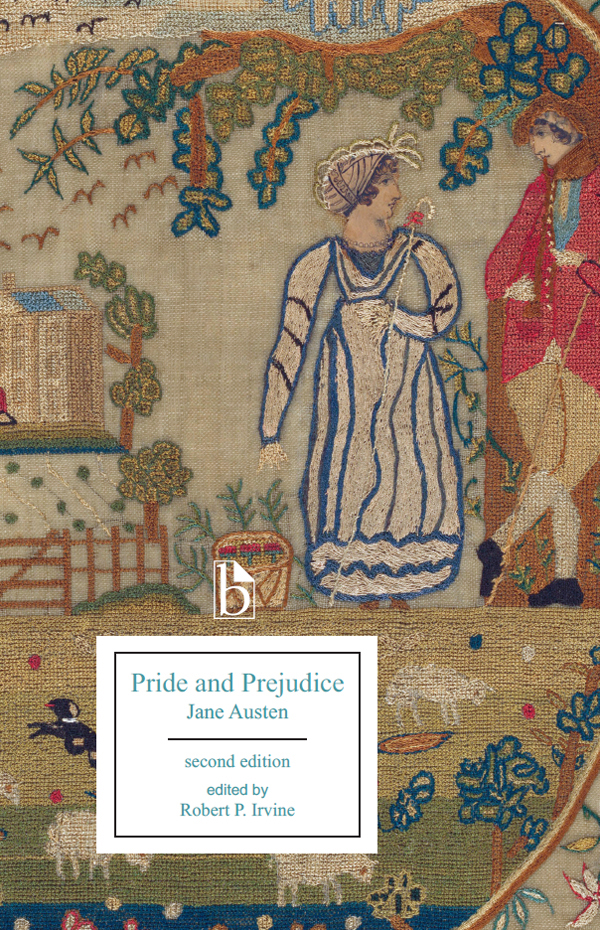
Pride and Prejudice by Jane Austen, Robert P. Irvine
Elizabeth Bennet is Austen’s most liberated and appealing heroine, and Pride and Prejudice has remained over most of the past …

Bookish version of pdotb@todon.eu
This link opens in a pop-up window
11% complete! pdotb has read 6 of 52 books.
Elizabeth Bennet is Austen’s most liberated and appealing heroine, and Pride and Prejudice has remained over most of the past …
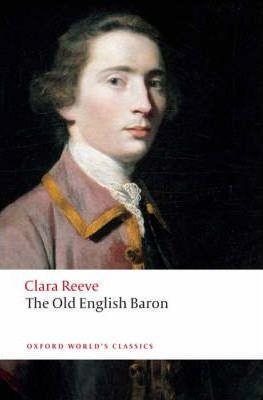
The Old English Baron is an early Gothic novel by the English author Clara Reeve. It was first published under …
How can we harness society's potential to change the trajectory of the climate crisis? So many of us feel helpless …

Fashionable and upbeat high schooler Aya loves listening to rock, but no one else seems to share her interest…until she …
Fashionable and upbeat high schooler Aya loves listening to rock, but no one else seems to share her interest…until she …
The Old English Baron is an early Gothic novel by the English author Clara Reeve. It was first published under …

In February 2021 the Canadian government published a considerably expanded list of domestic terrorist entities. …
Content warning canpol, racism, violence
Not a review as such, because I don't really know how to give this a star rating. It was more academic than I was expecting, though I shouldn't have been surprised given it's a university press! Among the 'highlights' was chapter 2, with a classification and partial enumeration of far-right groups in Canada. Particularly notable was its explanation of the ideology behind Diagolon, which is much more sinister than I remember from news coverage around the time of the convoy. There's some good analysis through chapters 3, 4, and 5 of how people are attracted to far-right groups and the world-view they build up. The authors see group members as rational actors, even if the underlying facts they lean on are a very one-sided view of reality, often veering into conspiratorial thinking. Chapter 6 is particularly good on the failures of PSC and CSIS, who appear stuck in a post-9/11 focus on Islamist terror and almost willfully ignore the danger of the far-right. Also good to see the authors comment on the term 'lone wolf' -- as they point out, this commonly-used expression assigns far too much 'coolness' to these individuals and is practically only ever used for white attackers -- 'lone actor' is a more helpfully-neutral term.
In February 2021 the Canadian government published a considerably expanded list of domestic terrorist entities. While some, such as Blood …
Elizabeth Bennet is Austen’s most liberated and appealing heroine, and Pride and Prejudice has remained over most of the past …
One moment, Sir Sam Vimes is in his old patrolman form, chasing a sweet-talking psychopath across the rooftops of Ankh-Morpork. …
One moment, Sir Sam Vimes is in his old patrolman form, chasing a sweet-talking psychopath …
This is the first of Pratchett's novels that I've read to the end (I've certainly tried at least one before and didn't get anywhere) and I think I understand the attraction. Vimes is a thoroughly decent chap, in a messy world, and Pratchett weaves words of wisdom into a pretty entertaining story. I'm not sure it moved me enough to hoover up the rest of his books, but I at least understand why people like him so much.
This is the first of Pratchett's novels that I've read to the end (I've certainly tried at least one before and didn't get anywhere) and I think I understand the attraction. Vimes is a thoroughly decent chap, in a messy world, and Pratchett weaves words of wisdom into a pretty entertaining story. I'm not sure it moved me enough to hoover up the rest of his books, but I at least understand why people like him so much.
Jane Austen’s first published novel, Sense and Sensibility, is a witty satire of the sentimental novel, a popular genre in …
Jane Austen’s first published novel, Sense and Sensibility, is a witty satire of the sentimental …
Enjoyable story, enlivened by Austen's wonderful turns of phrase.
Enjoyable story, enlivened by Austen's wonderful turns of phrase.
Jane Austen’s first published novel, Sense and Sensibility, is a witty satire of the sentimental …
I don't think I'd appreciated before now just how funny Austen could be. Among some highlights:
Mrs. John Dashwood had never been a favourite with any of her husband’s family; but she had had no opportunity, till the present, of shewing them with how little attention to the comfort of other people she could act when occasion required it. (p44).
His manners to them, though calm, were perfectly kind; to Mrs. Jennings, most attentively civil; and on Colonel Brandon’s coming in soon after himself, he eyed him with a curiosity which seemed to say, that he only wanted to know him to be rich, to be equally civil to him. (p240)
Elinor, while she waited in silence and immovable gravity, the conclusion of such folly, could not restrain her eyes from being fixed on him with a look that spoke all the contempt it excited. It was …
I don't think I'd appreciated before now just how funny Austen could be. Among some highlights:
Mrs. John Dashwood had never been a favourite with any of her husband’s family; but she had had no opportunity, till the present, of shewing them with how little attention to the comfort of other people she could act when occasion required it. (p44).
His manners to them, though calm, were perfectly kind; to Mrs. Jennings, most attentively civil; and on Colonel Brandon’s coming in soon after himself, he eyed him with a curiosity which seemed to say, that he only wanted to know him to be rich, to be equally civil to him. (p240)
Elinor, while she waited in silence and immovable gravity, the conclusion of such folly, could not restrain her eyes from being fixed on him with a look that spoke all the contempt it excited. It was a look, however, very well bestowed, for it relieved her own feelings, and gave no intelligence to him. (p309)
