User Profile

vxnxnt

vxnxnt@wyrms.de

Joined 3 years, 2 months ago

Heavily interested in politics, games, music, technology and just the world altogether. I'm also a computer engineering student of the TU Braunschweig. Bilingual in English and German.

This link opens in a pop-up window

vxnxnt's books

Currently Reading

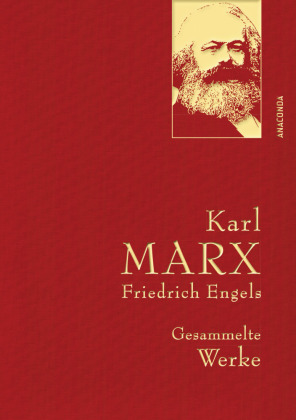
Friedrich Engels, Karl Marx: Karl Marx/Friedrich Engels Gesammelte Werke (Hardcover, Deutsch language, 2016, Anaconda Verlag)

Karl Marx wollte verstanden werden und schuf einprägsame Sätze wie 'Proletarier aller Länder, vereinigt euch!'. …

Aber weder die Verwandlung in Aktiengesellschaften und Trusts noch die in Staatseigentum hebt die Kapitaleigenschaft der Produktivkräfte auf. Bei den Aktiengesellschaften und Trusts liegt dies auf der Hand. Und der moderne Staat ist wieder nur die Organisation, welche sich die bürgerliche Gesellschaft gibt, um die allgemeinen äußern Bedingungen der kapitalistischen Produktionsweise aufrechtzuerhalten gegen Übergriffe sowohl der Arbeiter wie der einzelnen Kapitalisten. Der moderne Staat, was auch seine Form, ist eine wesentlich kapitalistische Maschine, Staat der Kapitalisten, der ideelle Gesamtkapitalist. Je mehr Produktivkräfte er in sein Eigentum übernimmt, desto mehr wird er wirklicher Gesamtkapitalist, desto mehr Staatsbürger beutet er aus. Die Arbeiter bleiben Lohnarbeiter, Proletarier. Das Kapitalverhältnis wird nicht aufgehoben, es wird vielmehr auf die Spitze getrieben. Aber auf der Spitze schlägt es um. Das Staatseigentum an den Produktivkräften ist nicht Lösung des Konflikts, aber es birgt in sich das formelle Mittel, die Handhabe der Lösung.

Karl Marx/Friedrich Engels Gesammelte Werke by , (Page 763 - 764)

Friedrich Engels hat hier wohl die Problematik des Staatskapitalismus in seinem Werk "Die Entwicklung des Sozialismus von der Utopie zur Wissenschaft" von 1880 schon erkannt und aufgefasst.

avatar for vxnxnt vxnxnt boosted
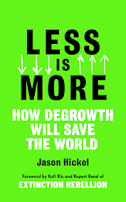
Jason Hickel: Less Is More (2021, Penguin Random House)

The world has finally awoken to the reality of climate breakdown and ecological collapse. Now …

Sometimes new ideas can make you see everything differently. Old myths fall apart, and new possibilities come into view. Difficult problems melt away, or become much easier to solve. Things that once seemed unthinkable suddenly become obvious. Whole worlds can change.

I like to imagine a time in the future when I'm again captivated by the number of insects back home in Eswatini. I'm an old man, sitting on the porch in the evening, watching them in awe, listening to their chirping, just as I did as a child. In this vision, a lot has changed about the world. High-income countries brought their use of resources and energy down to sustainable levels. We began to take democracy seriously, shared income and wealth more fairly, and put an end to poverty. The gap between rich countries and poor countries shrank. The word 'billionaire' dis- appeared from our languages. Working hours fell from forty or fifty hours a week down to twenty or thirty, giving people more time to focus on community, caring and the arts of living. High- quality public healthcare and education were made available to everyone. People came to live longer, happier, more meaningful lives. And we began to think of ourselves differently: as beings interconnected with, rather than separate from, the rest of the living world.

As for the planet, something remarkable happened. The rainforests grew back, across the Amazon, the Congo and Indonesia; dense and green and teeming with life. Temperate forests spread again across Europe and Canada. Rivers ran clear, and filled with fish. Whole ecosystems recovered. We accomplished a quick transition to renewable energy, global temperatures stabilised, and weather systems began to return to their ancient patterns. In a word, things started to heal... we began to heal.... and faster than anybody imagined was possible. We took less, but we gained so much more.

This book is about that dream. We have a journey ahead, which will I carry us over 500 years of history. We'll explore the roots of our current economic system, how it took hold, and what makes it tick. We will look at concrete, practical steps we can take to reverse ecological breakdown and build an alternative, post-capitalist economy. And we will travel across continents, to cultures and communities that interact with the living world in ways that open up whole new horizons of the imagination.

Right now it may just be the faintest whisper of a possibility. But whispers can build into winds, and take the world by storm.

Less Is More by 

OK, now I am very intrigued.

Friedrich Engels, Karl Marx: Karl Marx/Friedrich Engels Gesammelte Werke (Hardcover, Deutsch language, 2016, Anaconda Verlag)

Karl Marx wollte verstanden werden und schuf einprägsame Sätze wie 'Proletarier aller Länder, vereinigt euch!'. …

Wunderbar in der Tat war die Verwandlung, die die Kommune an Paris vollzogen hatte! Keine Spur mehr von dem buhlerischen Paris des zweiten Kaisertums. Paris war nicht länger der Sammelplatz von britischen Grundbesitzern, irischen Absentees, amerikanischen Ex-Sklavenhaltern und Emporkömmlingen, russischen Ex-Leibeignenbesitzern und walachischen Bojaren. Keine Leichen mehr in der Morgue, keine nächtlichen Einbrüche und fast keine Diebstähle mehr; seit den Februartagen von 1848 waren die Straßen von Paris wirklich einmal wieder sicher, und das ohne irgendwelche Polizei.

Karl Marx/Friedrich Engels Gesammelte Werke by , (Page 647)

Entnommen von "Der Bürgerkrieg in Frankreich", die Schriften von Marx über die Pariser Kommune.

avatar for vxnxnt vxnxnt boosted
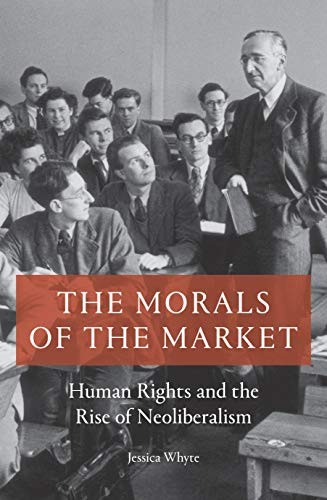
Jessica Whyte: The Morals of the Market (Paperback, 2019, Verso)

Drawing on detailed archival research on the parallel histories of human rights and neoliberalism, Jessica …

For you to be a Communist or a Socialist is to be totalitarian. For me, not so. I believe man is free when he has an economic position that guarantees him work, food, housing, health, rest and recreation. I am the founder of the Socialist Party and I must tell you that I am not totalitarian, and I think Socialism frees man. - Salvador Allende

The Morals of the Market by 

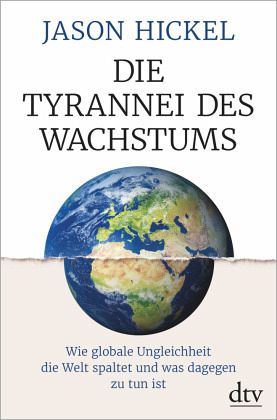
Jason Hickel: Die Tyrannei des Wachstums (Hardcover, Deutsch language, 2018, DTV Verlag)

Seit Dekaden hören wir, Entwicklung hilft: Die südlichen Länder der Welt schließen zum reichen Norden …

An indespensible book for understanding global poverty and inequality

This book went into a lot of detail, from which I was able to learn quite a lot. It mainly covers the inner workings of the current global economy and answers the question of how poor countries came to be poor and why they will stay poor. In this sense, the book pretty much outdid itself in every regard.

The Divide covers the history of Colonialism and Capitalism as to show how europe enriched themselves by underdeveloping the global south. Hickel takes a look at various sources and historical data to show just how many natural resources (e.g. Gold and Silver) were stolen and the genocide of the indigenous population that followed. Additionally, the author takes a look at many military coups supported by the West and the consequences as such. Hickel goes into great detail explaining how Neoliberalism was born and its first trial in Chile after a …

Friedrich Engels, Karl Marx: Karl Marx/Friedrich Engels Gesammelte Werke (Hardcover, Deutsch language, 2016, Anaconda Verlag)

Karl Marx wollte verstanden werden und schuf einprägsame Sätze wie 'Proletarier aller Länder, vereinigt euch!'. …

Die Waffe der Kritik kann allerdings die Kritik der Waffen nicht ersetzen, die materielle Gewalt muss gestürzt werden durch materielle Gewalt, allein auch die Theorie wird zur materiellen Gewalt, sobald sie die Massen ergreift. Die Theorie ist fähig, die Massen zu ergreifen, sobald sie ad hominem demonstriert, und sie demonstriert ad hominem, sobald sie radikal wird. Radikal sein ist die Sache an der Wurzel fassen. Die Wurzel für den Menschen ist aber der Mensch selbst. Der evidente Beweis für den Radikalismus der deutschen Theorie, also für ihre praktische Energie, ist ihr Ausgang von der entschiedenen positiven Aufhebung der Religion. Die Kritik der Religion endet mit der Lehre, dass der Mensch das höchste Wesen für den Menschen sei, also mit dem kategorischen Imperativ, alle Verhältnisse umzuwerfen, in denen der Mensch ein erniedrigtes, ein geknechtetes, ein verlassenes, ein verächtliches Wesen ist.

Karl Marx/Friedrich Engels Gesammelte Werke by , (Page 21)

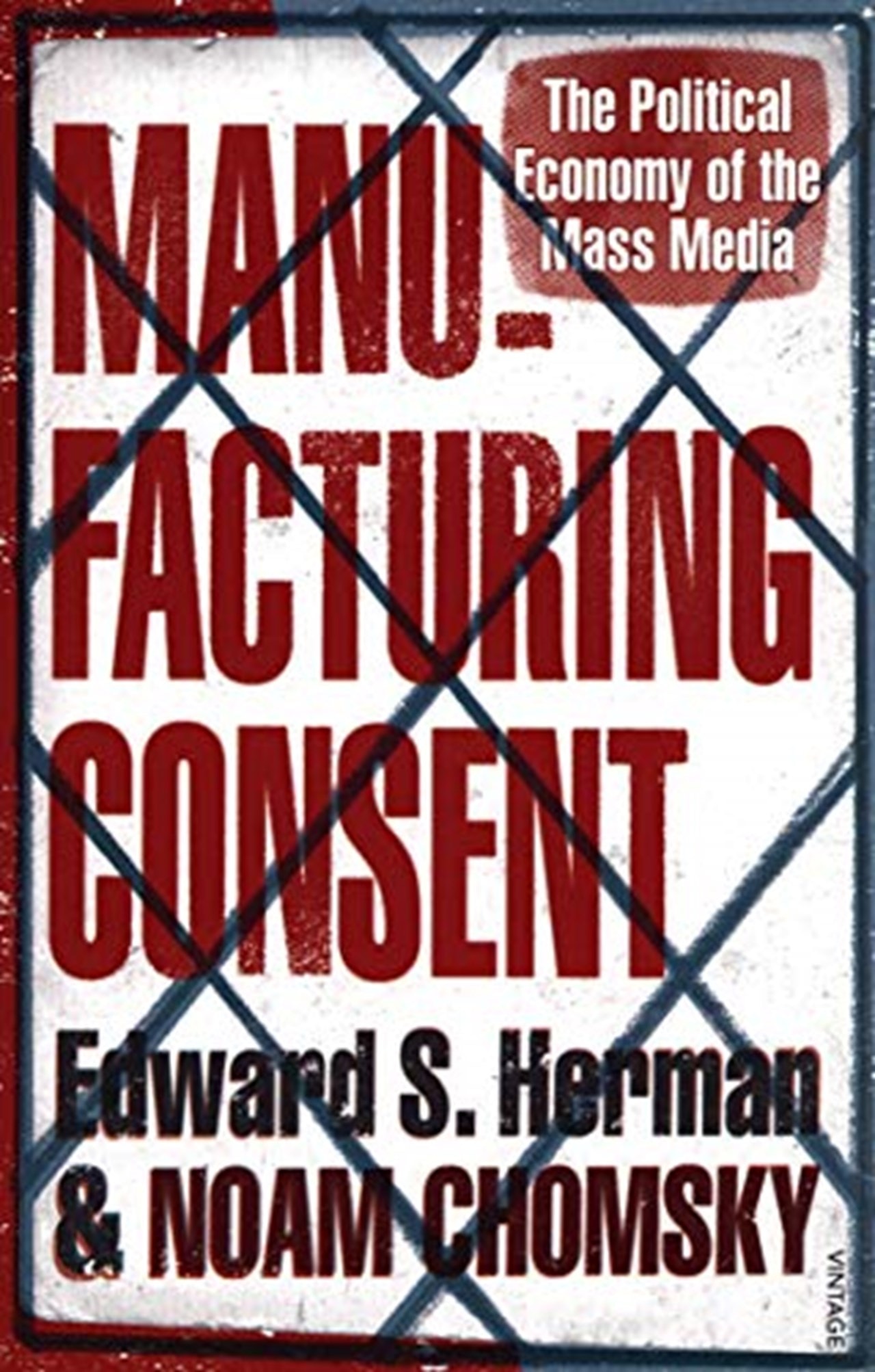
reviewed Manufacturing consent by Noam Chomsky

Noam Chomsky, Edward S. Herman: Manufacturing consent (Paperback, 1994, Vintage)

Manufacturing Consent: The Political Economy of the Mass Media is a 1988 book by Edward …

An essential read for anyone looking to challenge the current hegemonic common sense

I found this to be quite an interesting read which, although published in 1988, is still fairly relevant and now has helped me gain a new perspective on the inner workings of the mass media and the political economy encompassing it.

In the first chapter, Herman and Chomsky describe the political economy and derive their "propaganda model" from it. This propaganda model has "five filters" as follows: 1. Size, ownership, and profit orientation; 2. The advertising license to do business; 3. Sourcing mass media news; 4. Flak and the enforcers; 5. Anti-communism as a control mechanism. All of these aspects come together as filters for a system of self-censorship and deceit, whether conscious or unconsciously, directed towards the population to sustain the prevalent narrative of the U.S. government and the elite class.

The following six chapters are case studies in which the authors take a look at various …

Noam Chomsky, Edward S. Herman: Manufacturing consent (Paperback, 1994, Vintage)

Manufacturing Consent: The Political Economy of the Mass Media is a 1988 book by Edward …

The organization and self-education of groups in the community and workplace, and their networking and activism, continue to be the fundamental elements in steps toward the democratization of our social life and any meaningful social change. Only to the extent that such developments succeed can we hope to see media that are free and independent.

Manufacturing consent by , (Page 307)

Lenin: Imperialism (Paperback, 2015, Rough Draft Printing)

An Unabridged Edition with all charts, tables, and original footnotes, to include: Preface – Preface …

Imperialism is the epoch of finance capital and of monopolies, which introduce everywhere the striving for domination, not for freedom. Whatever the political system, the result of these tendencies is everywhere reaction and an extreme intensification of antagonisms in this field. Particularly intensified become the yoke of national oppression and the striving for annexations, i.e., the violation of national independence.

Imperialism by  (Page 139)

Noam Chomsky, Marv Waterstone: Consequences of Capitalism (Paperback, 2021, Haymarket Books)

Covid-19 has revealed glaring failures and monstrous brutalities in the current capitalist system. It represents …

A variety of topics with lot's of historical evidence

The book has a large variety of topics concerning the Consequences Of Capitalism. This includes hegemonic common sense, militarism, the environment, neoliberalism (& globalization, financialization) and possible social change. All of which is given with relevant historical evidence, examples and context. The book also takes multiple ideas and concepts from other authors and implements them pretty well. This would include Karl Marx, Shoshana Zuboff and Mark Fisher (just to name a few). Aside from reading how much Capitalism effects our lives and in what way, I'm absolutely blown away by how much history this book has taught me and the amount of detail it went into!

So, if you're interested in learning the Consequences of Capitalism and a ton of history, then I would highly recommend it.