
Within the context of the Chinese Cultural Revolution, a military project sends messages to alien worlds. A nearby alien society receives these messages and makes plans to invade Earth.
I really expected more given all the enthusiasm I've heard. It's a bit of a mish-mash, some great sections, but too much going on, not that engaging characters... uh... it's pretty good, but was work to get through.
I think the image I will always remember is the computer made of tens of thousands of humans and flags. Liu Cixin explains how to make AND, OR, and NOT gates, and it is great, because the image concocted of a plain filled with people, all being fed by huge supply trains... Impossible to forget.
It is a strange story overall too. An the 3-body problem itself is really an issue. ;-)
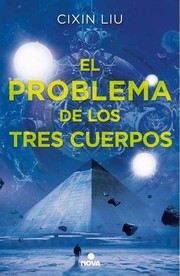
Review of 'El problema de los tres cuerpos' on 'Goodreads'
3 stars
Empecé con muchas ganas este ganador del Premio Hugo de 2015. Ciencia ficción "hard", de una cultura un tanto exótica para mí como la china, y con aplauso unánime de la crítica, prometía mucho. Y no es que sea una mala lectura ni mucho menos, pero me ha acabado decepcionando bastante.
Se dice que el autor está muy influido por Asimov, Clarke y similares, y la verdad es que sí: la trama contiene muchos elementos que podían haber sido originales en los años 60, pero que desde luego hoy en día no lo son, al menos en Occidente. El personaje principal es bastante plano; los secundarios, que tenían mimbres para ser interesantes, acaban resultando estereotípicos; el hecho de que la novela acabe en un "continuará" (es el primer libro de una trilogía) no ayuda tampoco a la redondez de la trama.
En otros aspectos donde se ven influencias de otros …
Empecé con muchas ganas este ganador del Premio Hugo de 2015. Ciencia ficción "hard", de una cultura un tanto exótica para mí como la china, y con aplauso unánime de la crítica, prometía mucho. Y no es que sea una mala lectura ni mucho menos, pero me ha acabado decepcionando bastante.
Se dice que el autor está muy influido por Asimov, Clarke y similares, y la verdad es que sí: la trama contiene muchos elementos que podían haber sido originales en los años 60, pero que desde luego hoy en día no lo son, al menos en Occidente. El personaje principal es bastante plano; los secundarios, que tenían mimbres para ser interesantes, acaban resultando estereotípicos; el hecho de que la novela acabe en un "continuará" (es el primer libro de una trilogía) no ayuda tampoco a la redondez de la trama.
En otros aspectos donde se ven influencias de otros autores, los extraterrestres, lejanos y enigmáticos pero a la vez muy humanos, me recuerdan poderosamente a los de Los Propios Dioses; el juego de realidad virtual no puede menos de sonarnos a Ender... Pero todo ello con menos fuerza que las referencias originales.
Curiosamente, donde me parece que el libro se vuelve más vivo y brillante es en sus regresiones sobre China, la Revolución Cultural y su evolución posterior. Quizás es simplemente por mi desconocimiento sobre el tema, pero los capítulos centrados en ese tema se me hicieron mucho más interesantes.
El libro se lee bien, entretiene y es de lectura ágil, pero esperaba algo más. No sé si continuaré con los otros dos libros de la trilogía, tocará pensarlo.
Review of 'The Three-Body Problem' on 'LibraryThing'
5 stars
Wow. In the classic way of much great sci-fi, this book uses a couple of outlandish inventions to explore the human society of its time. The inventions themselves are interesting, but their reflections in earth society much more so.
This is partly a book about China--particularly about how the horrors of the Cultural Revolution still shape survivors even now--but it also has a lot to say about globalised culture, especially the divisions within the environmental movement.
The first 2 or 3 chapters are set in the Cultural Revolution and are absolutely harrowing. If you have a hard time getting through them, it's worth knowing that the book doesn't stay that dark.
Wow. In the classic way of much great sci-fi, this book uses a couple of outlandish inventions to explore the human society of its time. The inventions themselves are interesting, but their reflections in earth society much more so.
This is partly a book about China--particularly about how the horrors of the Cultural Revolution still shape survivors even now--but it also has a lot to say about globalised culture, especially the divisions within the environmental movement.
The first 2 or 3 chapters are set in the Cultural Revolution and are absolutely harrowing. If you have a hard time getting through them, it's worth knowing that the book doesn't stay that dark.