
jay started reading Siren Queen by Nghi Vo
Siren Queen by Nghi Vo
It was magic. In every world, it was a kind of magic. "No maids, no funny talking, no fainting flowers." …

Contains brainfog. I admire people who have a clear definition for what each number of stars means, but I give them out purely intuitively.
This link opens in a pop-up window

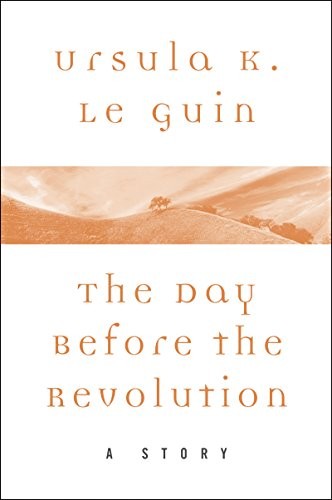
It was magic. In every world, it was a kind of magic. "No maids, no funny talking, no fainting flowers." …
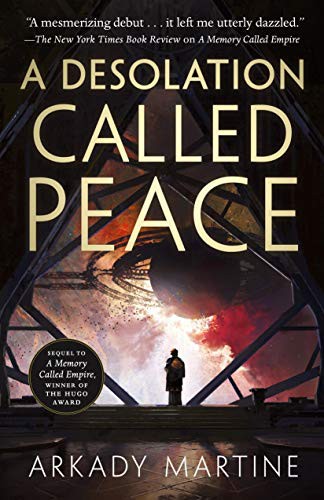
An alien armada lurks on the edges of Teixcalaanli space. No one can communicate with it, no one can destroy …
jay
boosted
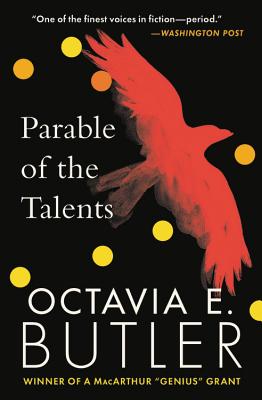
Environmental devastation and economic chaos have turned America into a land of depravity. Taking advantage …
the writing is fantastic. also there is more... story than in parable of the sower, definitely more things happening and also more hope. somebody (I forgot the source) wrote about this "parable of the sower is about problems, while parable of the talents is about solutions" and yeah, this seems true. it is also still about horrible, horrible problems. some of these chapters were really hard to get through.
also everything seems so realistic - the characters and the choices they have to face, but also the USA/world politics.
the earthseed verses feel so much on point by now. they're definitely the thing I will remember most. as religions go, it's a good one.
EDIT: I wanted to add, if you want to read this book, check out the Octavia's Parables podcast by adrienne maree brown and Toshi Reagon. It is worth it for the songs from …
the writing is fantastic. also there is more... story than in parable of the sower, definitely more things happening and also more hope. somebody (I forgot the source) wrote about this "parable of the sower is about problems, while parable of the talents is about solutions" and yeah, this seems true. it is also still about horrible, horrible problems. some of these chapters were really hard to get through.
also everything seems so realistic - the characters and the choices they have to face, but also the USA/world politics.
the earthseed verses feel so much on point by now. they're definitely the thing I will remember most. as religions go, it's a good one.
EDIT: I wanted to add, if you want to read this book, check out the Octavia's Parables podcast by adrienne maree brown and Toshi Reagon. It is worth it for the songs from the opera "parable of the sower" alone!
jay
boosted
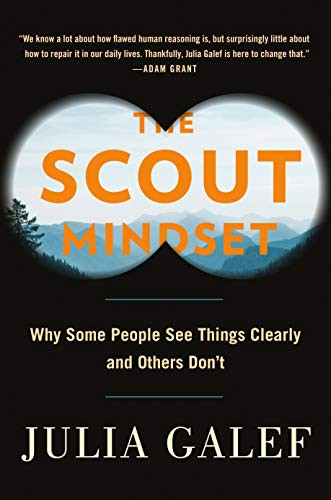
A better way to combat knee-jerk biases and make smarter decisions, from Julia Galef, the …
I saw this book get mentioned on fedi a while back, so got around to reading it. Its goal is to help people "see more clearly". The main metaphor of the book is to that we are often stuck in a "soldier mindset" (motivated reasoning to defend your beliefs, where being wrong feels like a mistake) and that we should try to have more of a "scout mindset" (finding the lay of the land and seeking truth, where being wrong means updating your map and is always a positive).
We use motivated reasoning not because we don't know any better, but because we're trying to protect things that are vitally important to us--our ability to feel good about our lives and ourselves, our motivation to try hard things and stick with them, our ability to look good and persuade, and our acceptance in our communities.
Some …
I saw this book get mentioned on fedi a while back, so got around to reading it. Its goal is to help people "see more clearly". The main metaphor of the book is to that we are often stuck in a "soldier mindset" (motivated reasoning to defend your beliefs, where being wrong feels like a mistake) and that we should try to have more of a "scout mindset" (finding the lay of the land and seeking truth, where being wrong means updating your map and is always a positive).
We use motivated reasoning not because we don't know any better, but because we're trying to protect things that are vitally important to us--our ability to feel good about our lives and ourselves, our motivation to try hard things and stick with them, our ability to look good and persuade, and our acceptance in our communities.
Some of this I'd heard before, but I learned a good bit too; this was a surprisingly practical book and a quick read.
Bits I enjoyed and that stuck with me:
jay
boosted
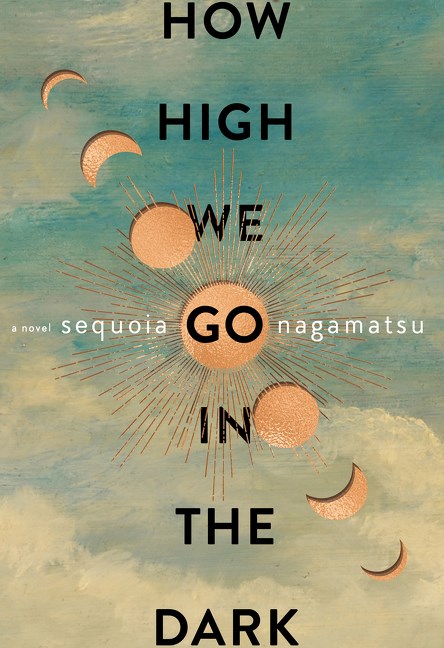
Beginning in 2030, a grieving archeologist arrives in the Arctic Circle to continue the work …
I read this for the #SFFBookClub January book pick. How High We Go in the Dark is a collection of interconnected short stories dealing with death, grief, and remembrance in the face of overwhelming death and a pandemic. Despite getting very dark, I was surprised at the amount of hopefulness to be found in the face of all of this.
It was interesting to me that this collection had been started much earlier and the Arctic plague was a later detail to tie everything together. Personally, I feel really appreciative of authors exploring their own pandemic-related feelings like this; they're certainly not often comfortable feelings, but it certainly helps me personally, much more than the avoidance and blinders song and dance that feels on repeat everywhere else in my life.
It's hard for me to evaluate this book as a whole. I deeply enjoyed the structural setup, and …
I read this for the #SFFBookClub January book pick. How High We Go in the Dark is a collection of interconnected short stories dealing with death, grief, and remembrance in the face of overwhelming death and a pandemic. Despite getting very dark, I was surprised at the amount of hopefulness to be found in the face of all of this.
It was interesting to me that this collection had been started much earlier and the Arctic plague was a later detail to tie everything together. Personally, I feel really appreciative of authors exploring their own pandemic-related feelings like this; they're certainly not often comfortable feelings, but it certainly helps me personally, much more than the avoidance and blinders song and dance that feels on repeat everywhere else in my life.
It's hard for me to evaluate this book as a whole. I deeply enjoyed the structural setup, and seeing background characters narrate their own chapters added quite a bit of emotional nuance. Pig Son especially would have hit differently without the background from a few chapters earlier. Some of the stories were quite full of knives, but my one complaint is that some stories in the back half felt like retreading similar grounds of grief and remembrance; they just didn't have the same level of impact for me. Both the final chapter and the title-generating chapter were thematically strong, but didn't quite carry the same level of emotional weight or closure that I wanted. I am not sure subjectively why I felt this way, but I think this is some of the flipside of its short story nature--that there's only a consistent emotional thread running through the book rather than a character or plot arc.
I'm really glad to have read this, and feel like a lot of these stories and feelings are going to stick with me for a long while.
An alien armada lurks on the edges of Teixcalaanli space. No one can communicate with it, no one can destroy …
jay
boosted
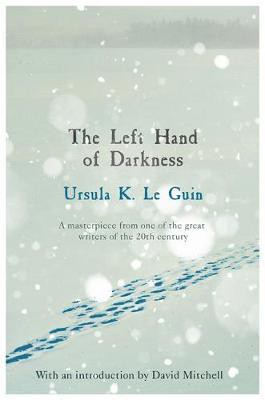
Comment by Kim Stanley Robinson, on The Guardian's website: The Left Hand of Darkness …
This one went deep instead of wide and that stood out
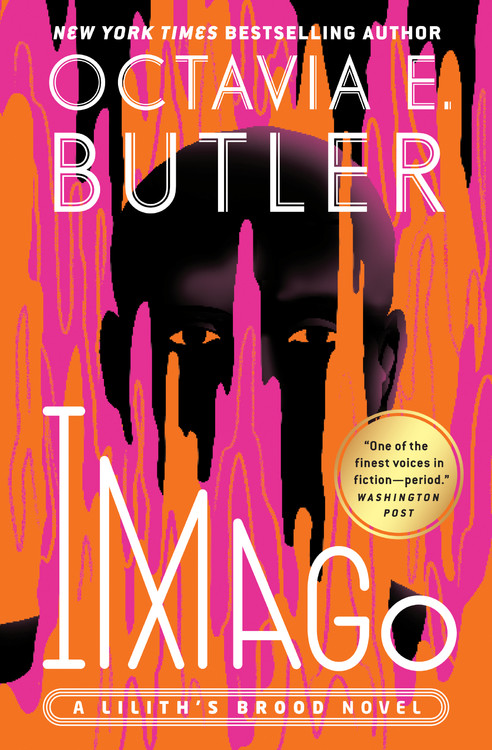
Child of two species, but part of neither, a new being must find his way. Human and Oankali have been …
Child of two species, but part of neither, a new being must find his way. Human and Oankali have been …
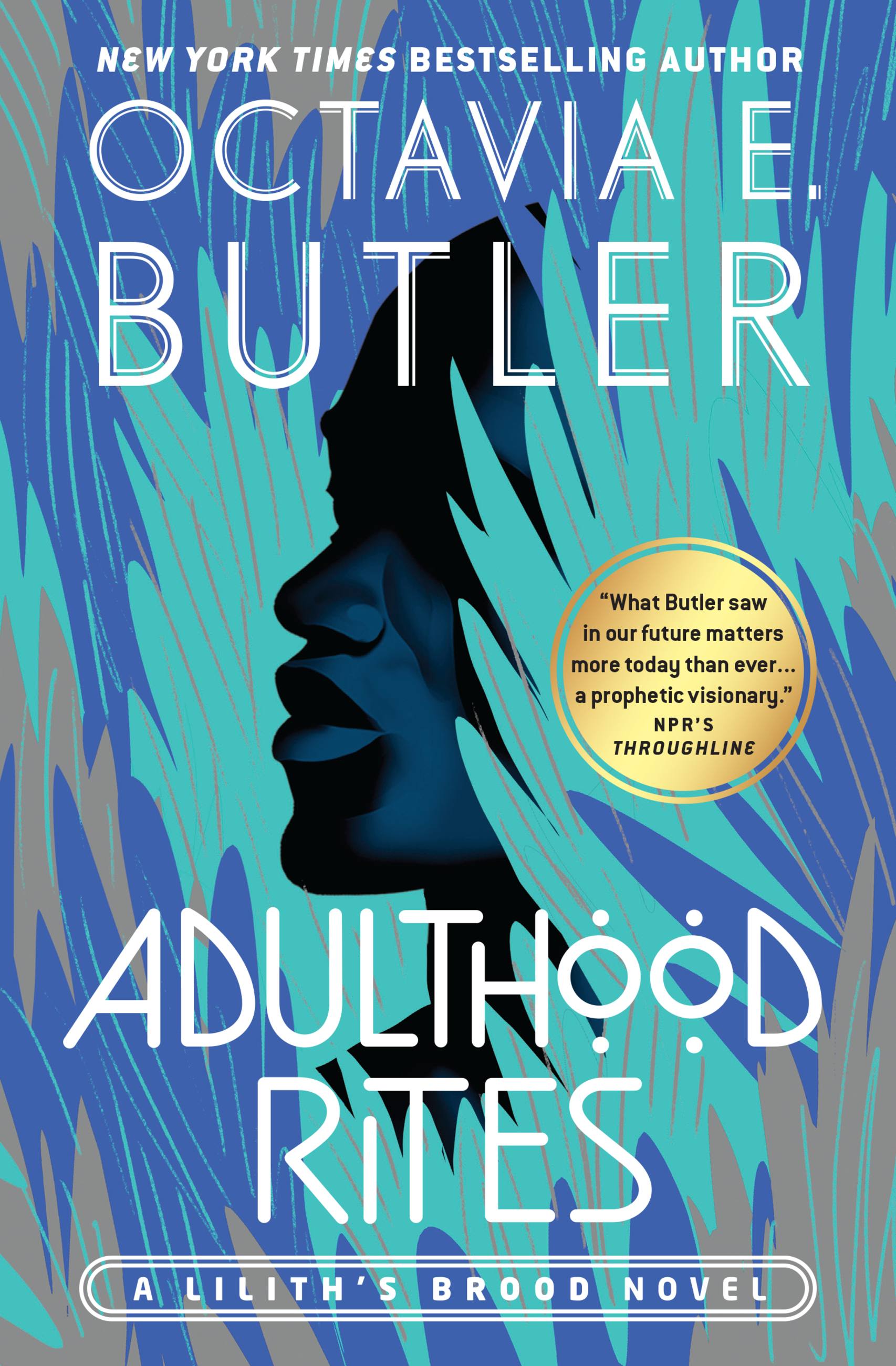
The second book in the Lilith's Brood trilogy, this story takes place years after the arrival of Oankali aliens in …
The second book in the Lilith's Brood trilogy, this story takes place years after the arrival of Oankali aliens in …
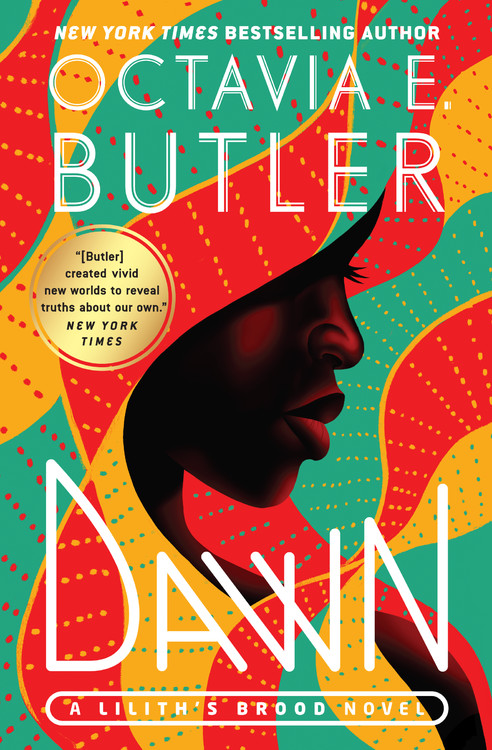
Lilith Iyapo has just lost her husband and son when atomic fire consumes Earth—the last stage of the planet’s final …
jay
boosted
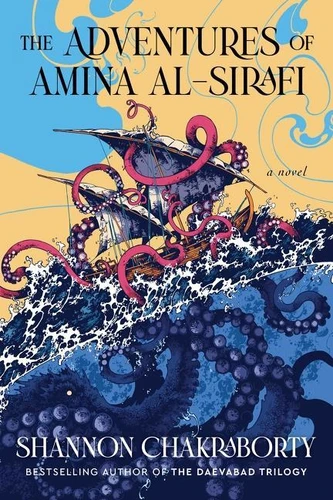
Amina al-Sirafi should be content. After a storied and scandalous career as one of the …
Now this was the sort of pirate queen adventure I was expecting when I had read Deep as the Sky, Red as the Sea. (That book is historical pirate politics and internal musings about power and this book is more fantasy adventure; I liked them both, they're just different.)
Amina al-Sarafi is a middle-aged pirate queen who gets blackmailed out of retirement into "one last job", gets the criminal gang back together, and ultimately faces off against a sorcerer and his sea monster (as if the cover doesn't give you this hint). (Also, gender stuff! You love to see it.)
It's set in the same world as her Daevabad trilogy although you don't need to have read those books at all. (You might appreciate a single character briefly appearing as well as the lawyer parrots, but that's about the extent of it.) My opinion here is that …
Now this was the sort of pirate queen adventure I was expecting when I had read Deep as the Sky, Red as the Sea. (That book is historical pirate politics and internal musings about power and this book is more fantasy adventure; I liked them both, they're just different.)
Amina al-Sarafi is a middle-aged pirate queen who gets blackmailed out of retirement into "one last job", gets the criminal gang back together, and ultimately faces off against a sorcerer and his sea monster (as if the cover doesn't give you this hint). (Also, gender stuff! You love to see it.)
It's set in the same world as her Daevabad trilogy although you don't need to have read those books at all. (You might appreciate a single character briefly appearing as well as the lawyer parrots, but that's about the extent of it.) My opinion here is that this is a fantasy pirate heist book and so is a bit more accessible than a fantasy djinn politics book (even if here it means that the world feels more like a stage and the side characters get a little bit less air time).
All in all great fun, highly recommend especially if you liked SA Chakraborty's previous work.
Lilith Iyapo has just lost her husband and son when atomic fire consumes Earth—the last stage of the planet’s final …